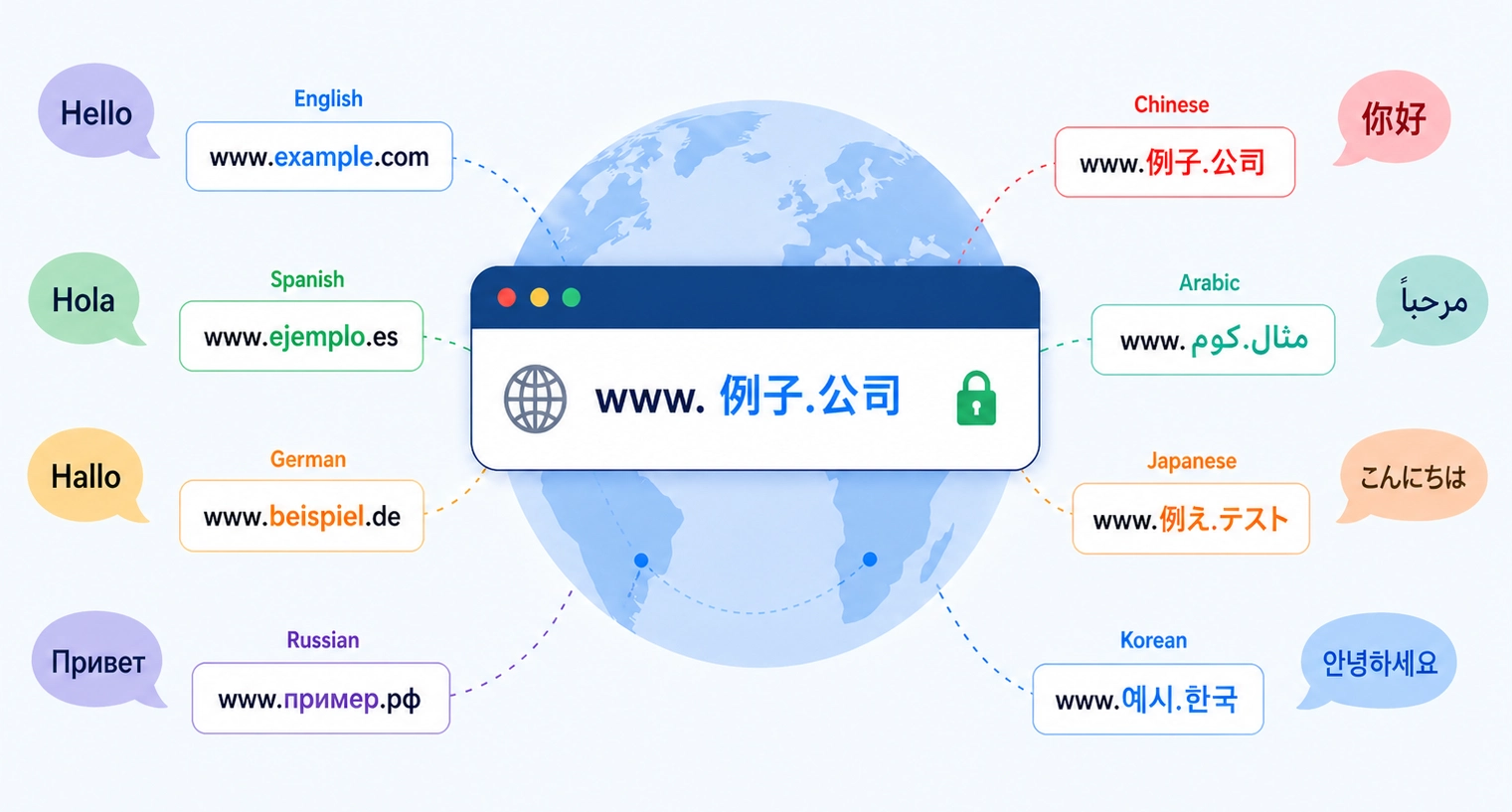
IDN stands for Internationalized Domain Name. It refers to a domain that includes characters from native languages, allowing the use of non-Latin scripts such as German, Spanish, Russian, Chinese, Arabic, and many others.
The main advantage of IDN domain names is that they enable you to reach your audience in their native language. Since most modern web browsers and email platforms now support non-English characters, many online businesses are recognizing the value of IDNs, leading to their increasing adoption. Additionally, IDN domains can enhance Search Engine Optimization (SEO) by allowing you to target the exact keywords that non-English users enter when searching online.
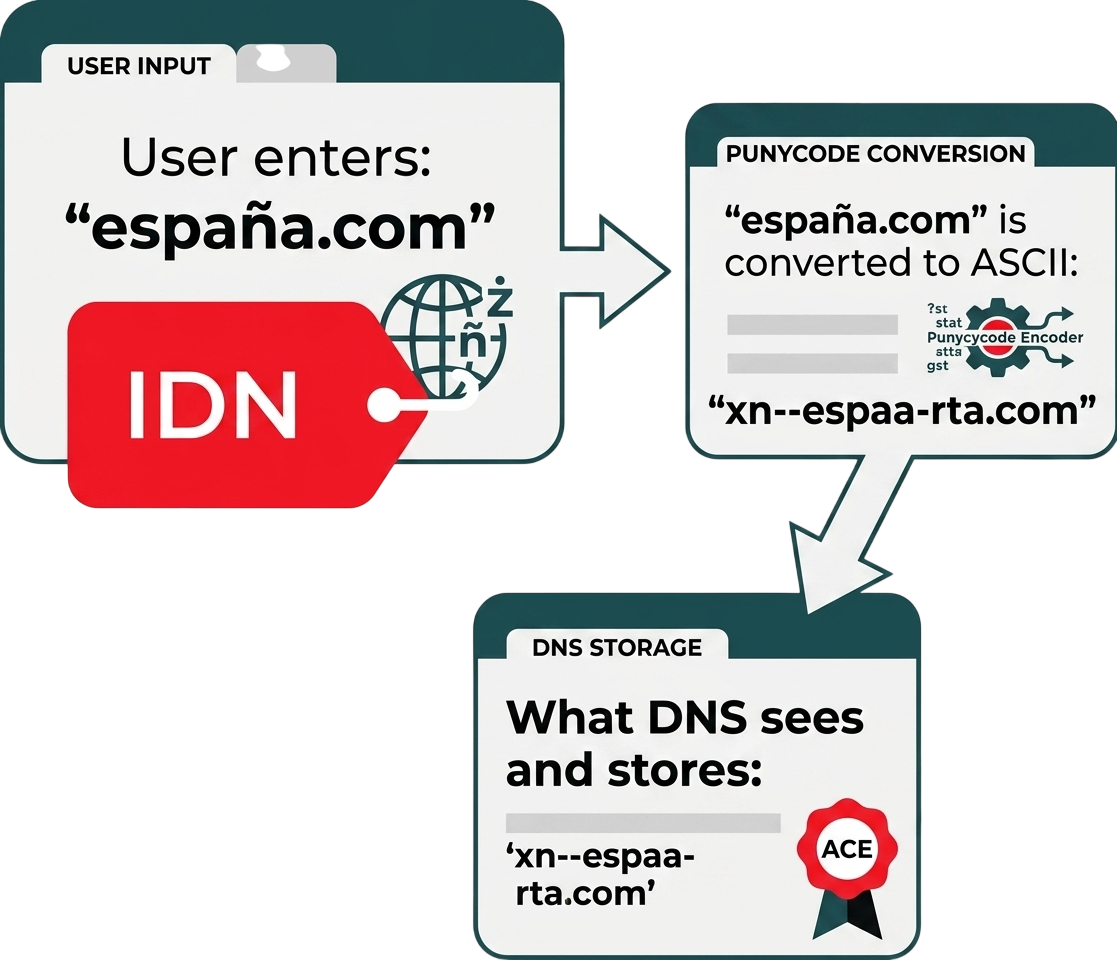
Domain Name Servers (DNS) are limited to using the English alphabet (A–Z), numbers (0–9), and a few punctuation marks such as hyphens and dots. To work around this restriction, a system called Punycode was introduced to make it possible to use non-English characters in domain names.Punycode works by converting characters from other languages into a format that DNS can understand. For example, the domain españa.com is transformed into xn--espaa-rta.com when encoded with Punycode. This converted version is known as an ACE (ASCII Compatible Encoding) string. When you register an Internationalized Domain Name (IDN), what is actually stored in the DNS is the ACE string, since it contains only supported characters.
Indicates ease of use Domains are simpler to read, remember, and type for users in their own language.

Shows the ability to expand your online presence worldwide, reaching users in different regions and languages.

Represents connecting with users in their native language. It emphasizes making your content more relatable and accessible to local audiences.

Symbolizes securing your brand name across multiple languages and scripts, helping prevent impersonation or misuse.


 English
 Find Domain
 Transfer a Domain Name
 Domain Name Resellers
 UG Block services
 Domain Tools & Services
 Domain Owner (WHOIS)
 Domain Name Auctioning
 Hosting
 cPanel Hosting
 Google Workspace
 Hosting for WordPress
 cPanel Based Hosting
 Cloud Based Hosting
 Google Cloud
 SSL Security
 Website Security
 DNSSEC
 Jetpack
 Code & Software
 Web Solutions
 Wix SiteBuilder
 Database Management
 Booking & Ticketing
 Microsoft Office 365
  Email Signatures